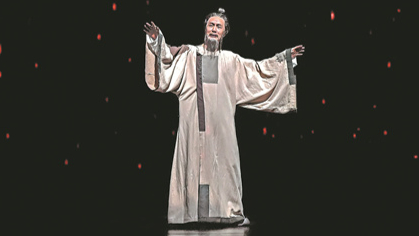
Du Fu
杜甫
- 分类: 语言文学
- ID: 1869583881210007558
Home CategoryLiteratureDu FuPlay4.5 minsDu Fu, born in 712 in Henan province, was a major Chinese literary figure during the Tang Dynasty (618-907). His poetry, shaped by the An Lushan Rebellion, is celebrated for its historical awareness and social commentary.ShareRelated Videos**Poetry in Sichuan: Du Fu 00:04:27News of Victory 00:05:25Poem read: Winter solstice maintains its glow 00:02:35Catalogue1. Early Life and Background2. Literary Contribution3. Influence and Legacy4. Du Fu's Residence and Museum5. Modern Interpretations and Cultural Impact6. Cultural and Historical Significance
Early Life and Background
Du Fu, known as a paramount figure in Chinese literature, was born in 712 in what is today Henan province, China. He lived during the Tang Dynasty, a period marked by both cultural flourishing and political turmoil. Du Fu's life coincided with a significant era in Chinese history, marked by the An Lushan Rebellion (755-763), a devastating conflict that led to a widespread upheaval. This background profoundly influenced his poetry, which is renowned for its historical consciousness and social commentary.
Literary Contribution
Du Fu is considered one of the greatest Chinese poets, often referred to as the "Poet Sage" due to his deep insight into the human condition and the socio-political issues of his time. His works are celebrated for their realism and moral integrity, providing a probing and empathetic reflection of the human struggle amidst the chaos of war and the intricacies of daily life. His poetry, rich in historical context, often depicted the suffering and resilience of the common people. Over his lifetime, Du Fu authored approximately 1,400 poems, many of which remain central to the Chinese literary canon.
Influence and Legacy
Du Fu's influence on Chinese literature and culture is profound and enduring. His works have been praised for their technical virtuosity and philosophical depth, earning him a place alongside other luminaries like Li Bai, who is often compared to him. His poetry recorded the life and times of the Tang Dynasty, thus earning the title "poetic historian." Du Fu's impact extends beyond literature; he is regarded as a cultural icon whose works are studied and memorized by students across generations. His poems have been translated into numerous languages, allowing a global audience to appreciate his insights into human nature and society.
Du Fu's Residence and Museum
One of the most significant sites associated with Du Fu is the Du Fu Thatched Cottage Museum in Chengdu, Sichuan province. This museum is built on the site where Du Fu lived for a brief yet productive period. During his stay in Chengdu, Du Fu composed some of his most famous works, including over 240 poems that reflect the depth of his experience and observations of life. The museum serves as a tribute to his enduring legacy, featuring exhibitions that highlight his life and work, along with a library housing ancient texts and translations of his poetry. The museum also includes traditional gardens and structures that evoke the ambiance of Du Fu's era.
Modern Interpretations and Cultural Impact
In contemporary times, Du Fu's life and work continue to inspire various forms of artistic expression. His poetry has been the subject of plays, such as the production by the Beijing People's Art Theatre, and dance dramas that reinterpret his experiences and themes for modern audiences. Documentaries, like "Du Fu: China's Greatest Poet" by Michael Wood, have introduced his works to Western audiences, fostering greater cultural understanding and appreciation. These adaptations and interpretations highlight the timeless relevance of Du Fu's insights, as they resonate with universal themes of perseverance, justice, and the human spirit.
Cultural and Historical Significance
Du Fu's work is not only significant in the realm of literature but also as a historical document. His poetry provides insights into the social and political dynamics of the Tang Dynasty, making it an invaluable resource for historians and literary scholars. The depth of his observations and his ability to articulate the complexities of human experience have made him a central figure in Chinese cultural history. Article reference1. Dance drama delves deep into the life story of great poet. chinaservicesinfo.com. 20242. Exhibition marks ink painter's commitment to art, nation and people. chinadaily.com.cn. 20223. Celebrities discuss 'fluid boundary' between science, culture. chinadaily.com.cn. 20204. Literary attraction. chinadaily.com.cn. 2017Photo Gallery(11 pictures)CategoriesLiteratureTagPoetryLiterary MastersRelatedStart of SpringFour Great AcademiesShigu AcademyBaidi City•Qutang Gorge Scenic Area, ChongqingCatalogue1. Early Life and Background2. Literary Contribution3. Influence and Legacy4. Du Fu's Residence and Museum5. Modern Interpretations and Cultural Impact6. Cultural and Historical Significance- - - []








